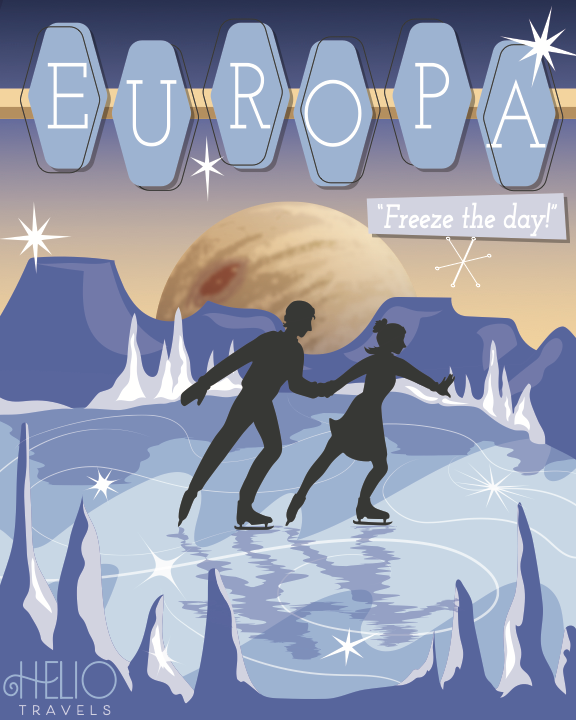
Europa is the closest moon to Jupiter. It has the smoothest and most light-reflective surface of any known moon in the solar system. Whether it's the imperceptibly frigid temperatures plunging well into the negative triple digits, or the 50 foot penitentes-- giant razor-sharp ice stalagmites puncturing the moon's surface-- Europa stays creative in its many methods of destruction.
But when's the last time you broke out your old ice skates?
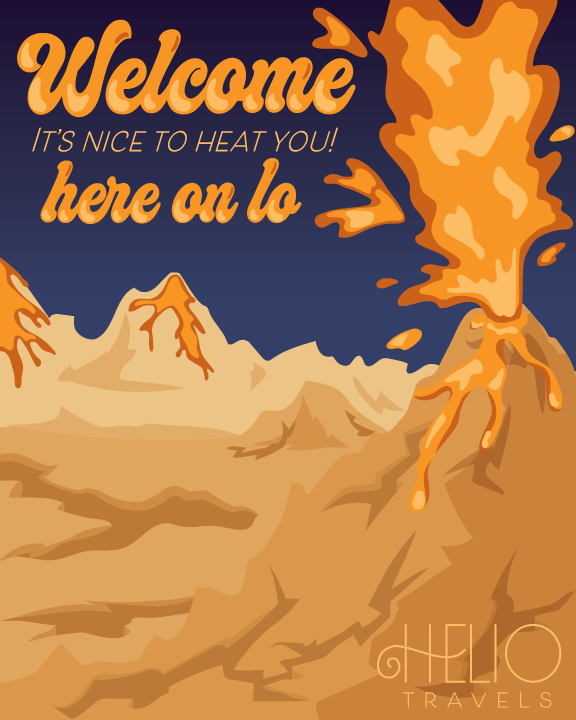
One of the largest moons of Jupiter, Io's surface is covered in hundreds of active volcanoes. The subsequent molten lava and sulfur oxide produce a cloud of gas surrounding the moon with extremely toxic levels of radiation. The volcano plumes, which can reach up to 300 miles above the surface, raise the temperature to about 260 degrees Fahrenheit. And when those plumes settle, they leave a thick layer of sulfur on the ground which is of course accompanied by rivers of scalding lava.
But haven't you been needing a vacation?
Saturn's largest moon may seem plain and barren at a glance, but a closer look at Titan's rocky surface and icy terrain will tell you otherwise. Mountains of hazardous gasses called cryovolcanoes stretch along the ground, puncturing a stratosphere so dense with fog, it blocks 90% of the Sun's light. Liquid methane rains on Titan almost constantly, cooling it to -290 degrees Fahrenheit.
But how about a break from work?